
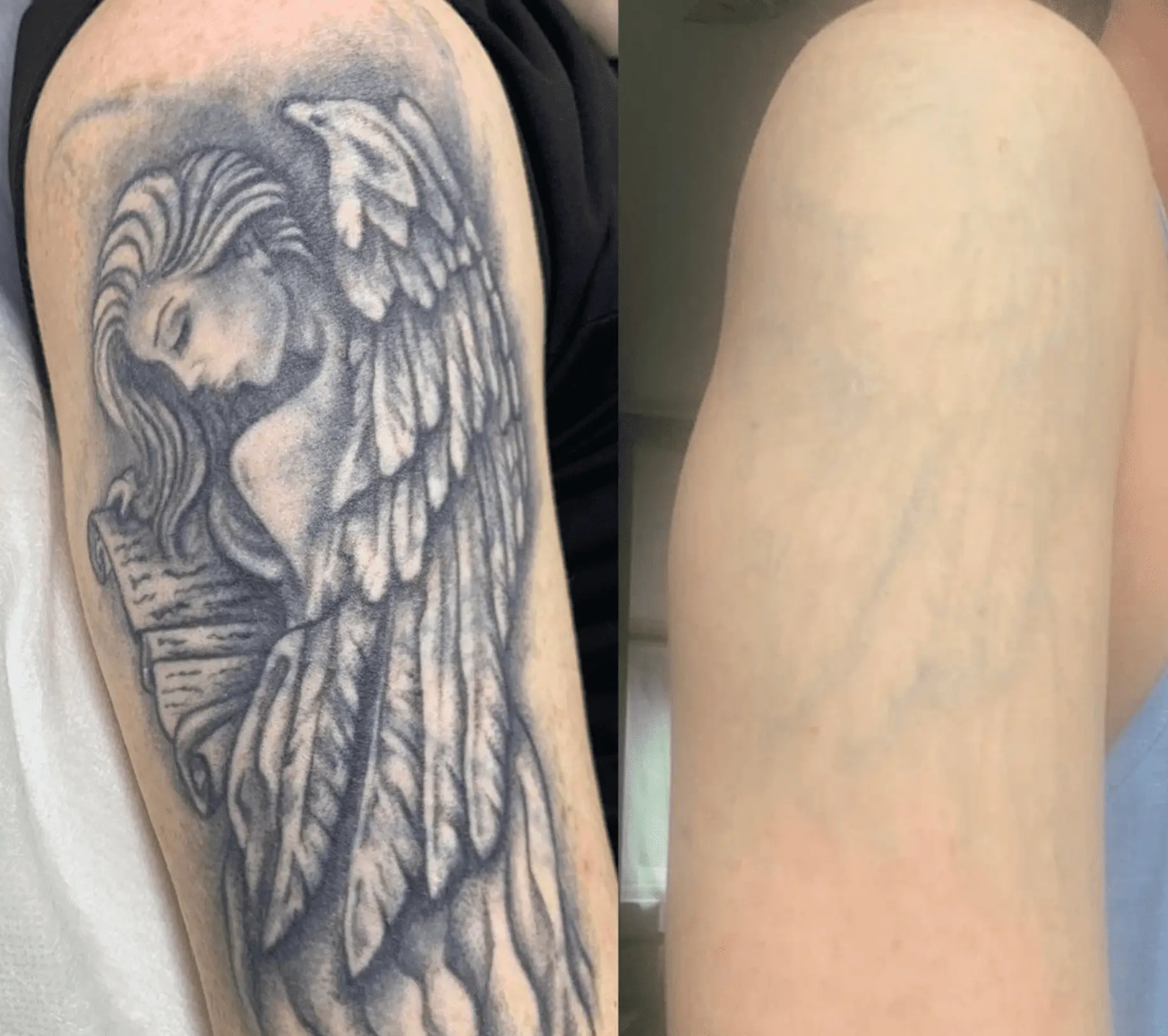
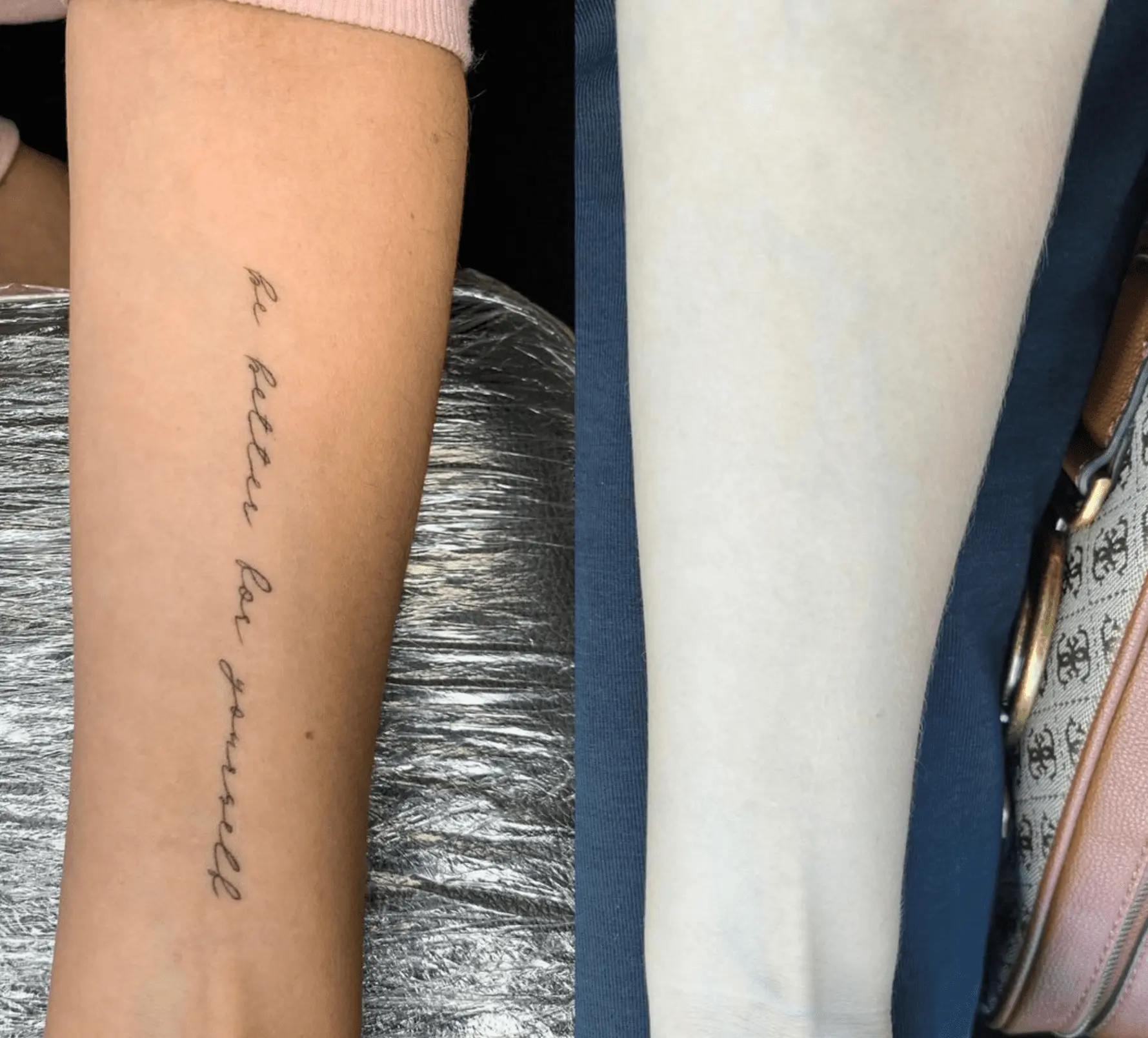
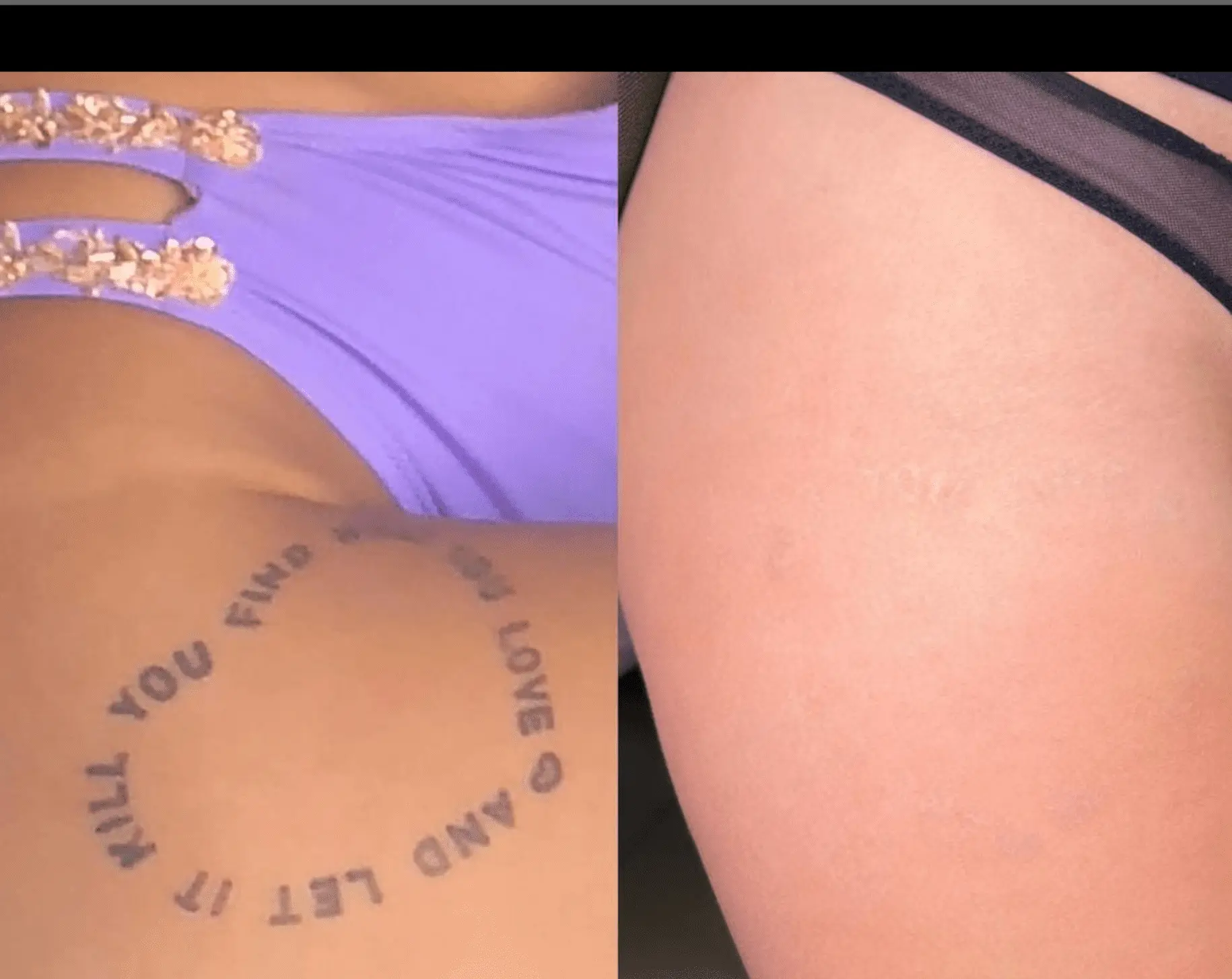
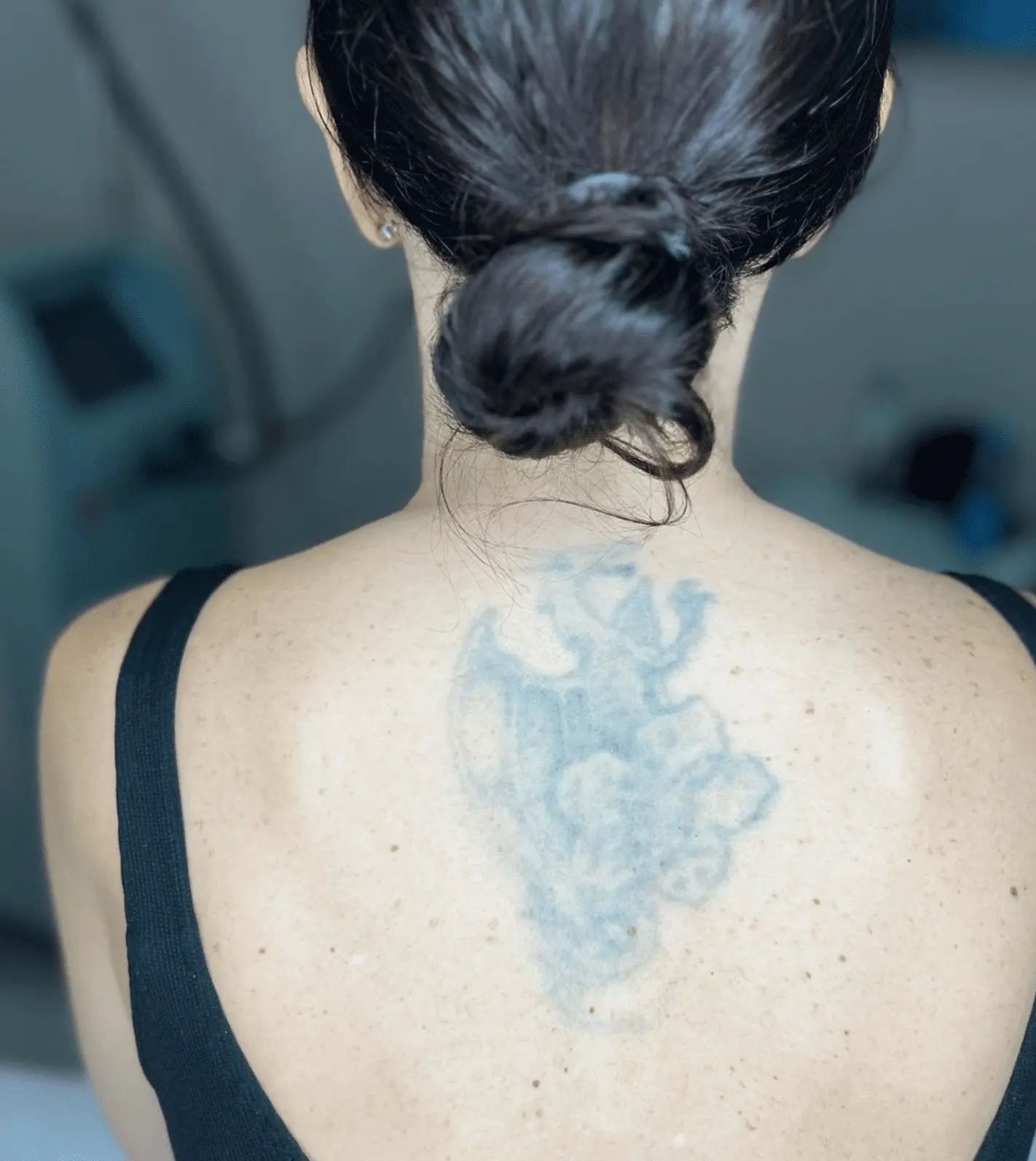
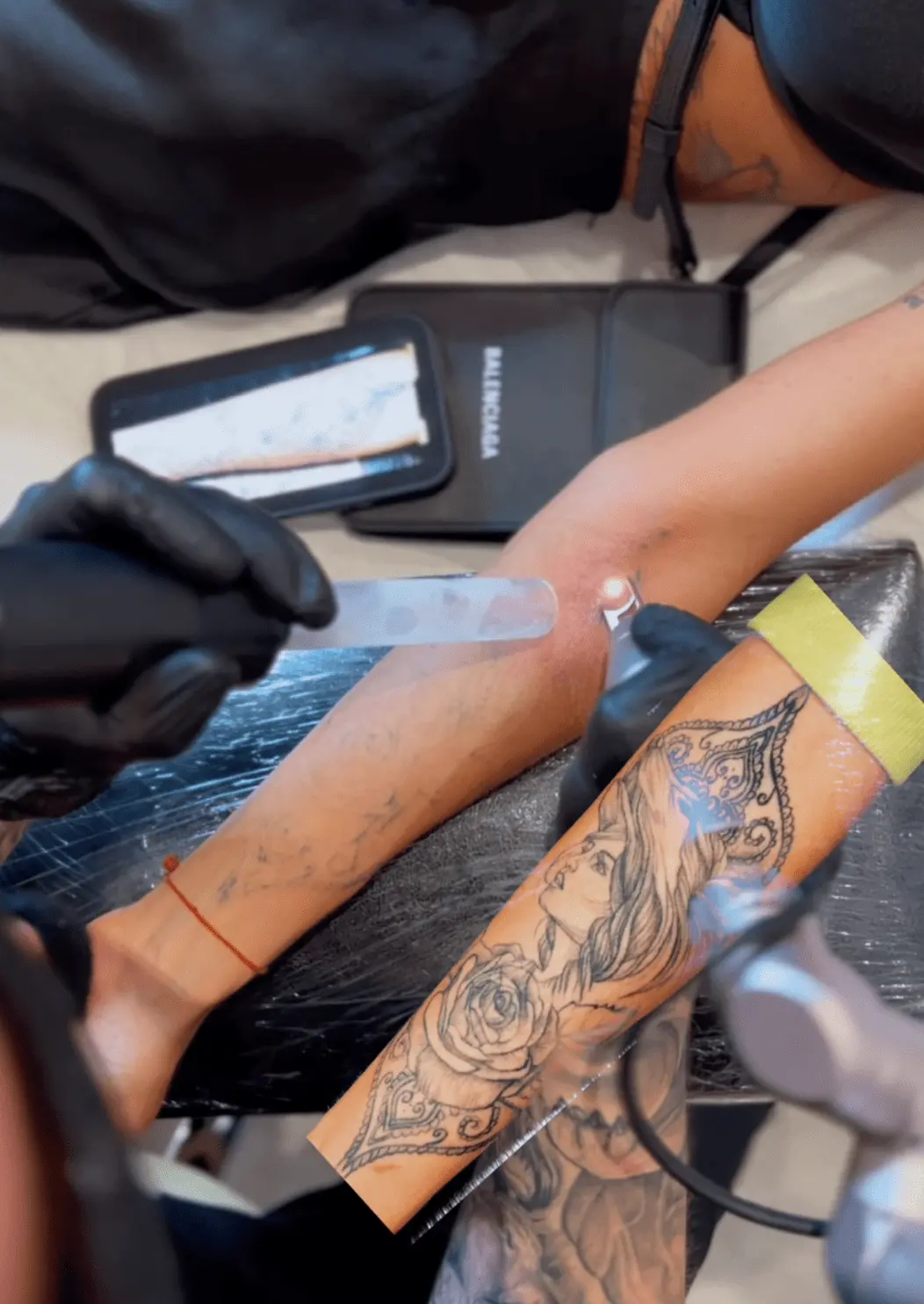
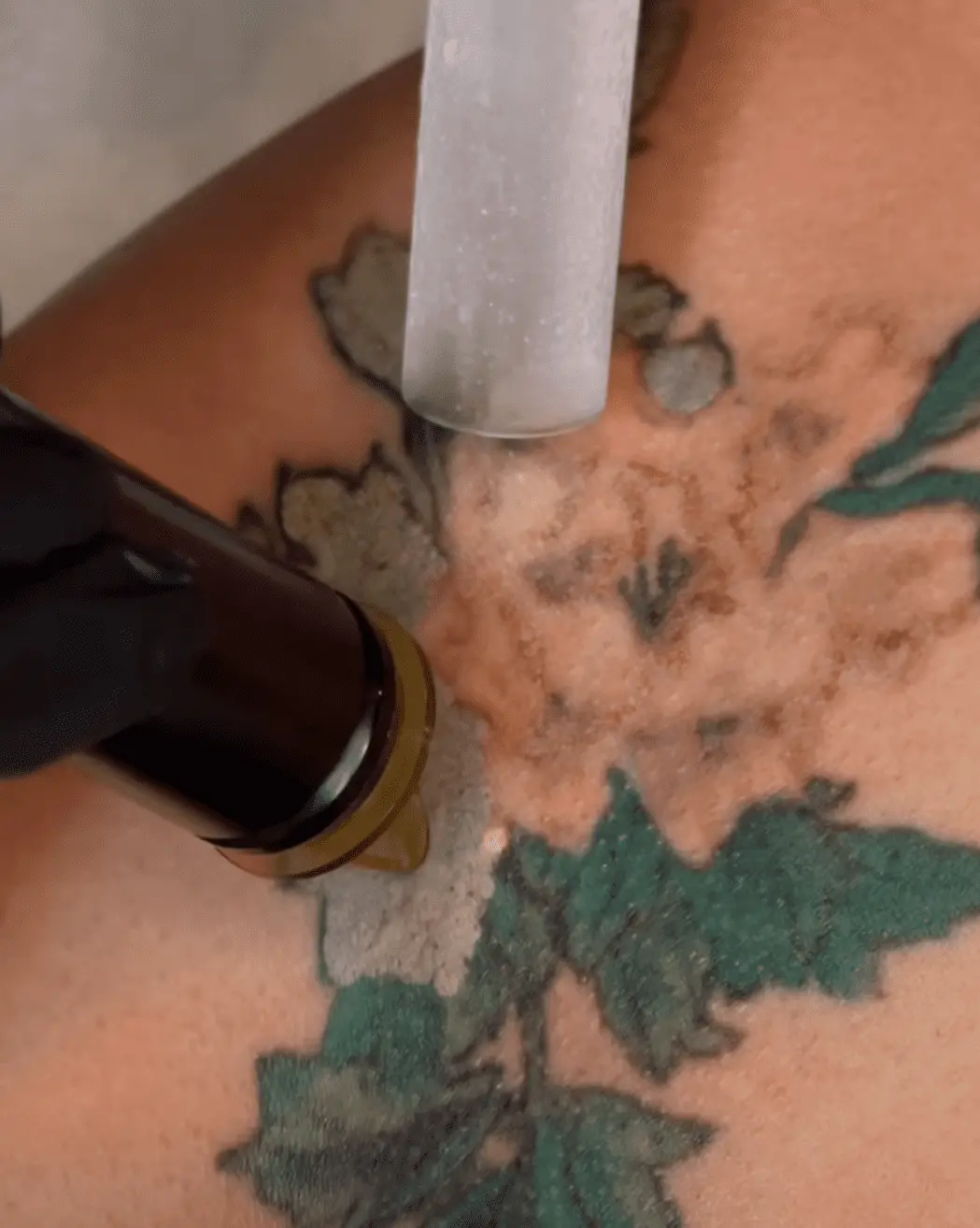
Laser removal tattoo – the only salvation in the case of unsuccessful permanent makeup of the lips, eyelids or eyebrows. The procedure requires no special preparation and is painless thanks to anesthesia. The laser light hits the pigment and destroys it. The dye, once broken down under the skin, is gradually eliminated with the lymph. The number of sessions depends on the technique and the age of the tattoo. The color of pigment also plays a role – laser is better at dealing with black and red shades.


Laser colour tattoo removal: the essence of the procedure
Colour tattoo removal of tattooing is considered the safest method of removing unsuccessful permanent. There are no scars after the session, the laser beam affects only the dye, not affecting the skin.
The beam has different wavelengths – from 532 nm to 1064 nm. The master adjusts the laser depending on the initial data and the shade of pigment. The brighter the pigment, the more effectively it is reduced. Therefore, a fresh tattoo is always easier to remove.
Contraindications
Laser tattoo removal is not recommended in the following cases:
- oncology;
- skin diseases;
- pregnancy and breast-feeding;
- fresh tan;
- epilepsy;
- cardiovascular disease;
- diabetes mellitus;
- the presence of scarring in the tattoo area;
hormonal imbalance.
Preparing for removal
Regardless of the area of exposure, the skin must first be cooled with dry ice or a special cryo unit. Laser tattoo removal in the lip area is faster, as it is less time-consuming and dangerous. The master works very carefully on the eyebrows and eyelids to avoid damaging the eyes. Laser removal of eyebrow tattooing takes about 2 minutes, the recommended number of sessions – from 3, depending on the area of coverage and freshness of the pigment.
Stages of laser eyebrow removal:
- cleansing of the skin from cosmetics;
- treatment with antibacterial agents;
- cooling of the area;
- choice of laser length;
- the impact of the laser pulse on the pigment.
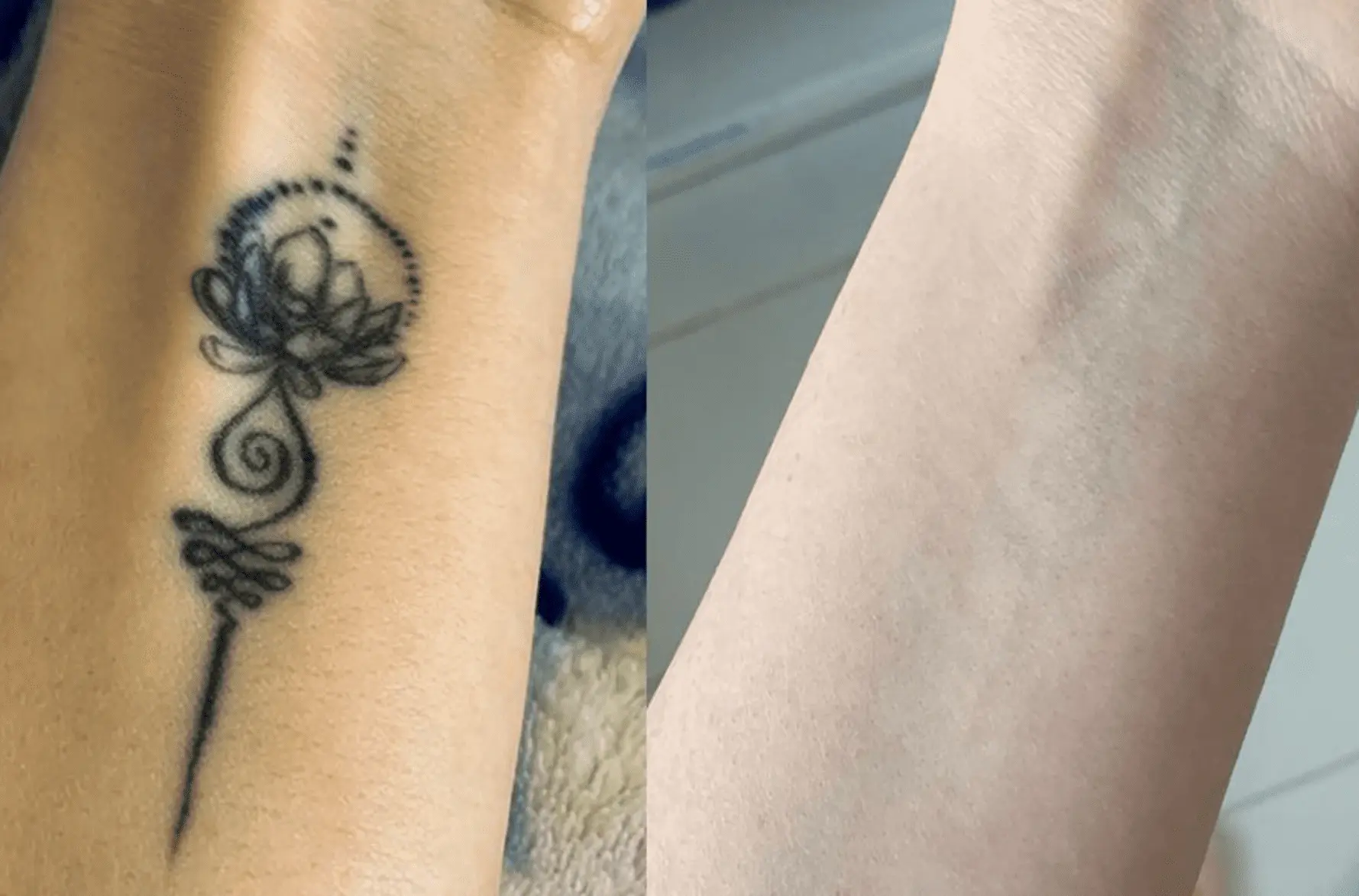
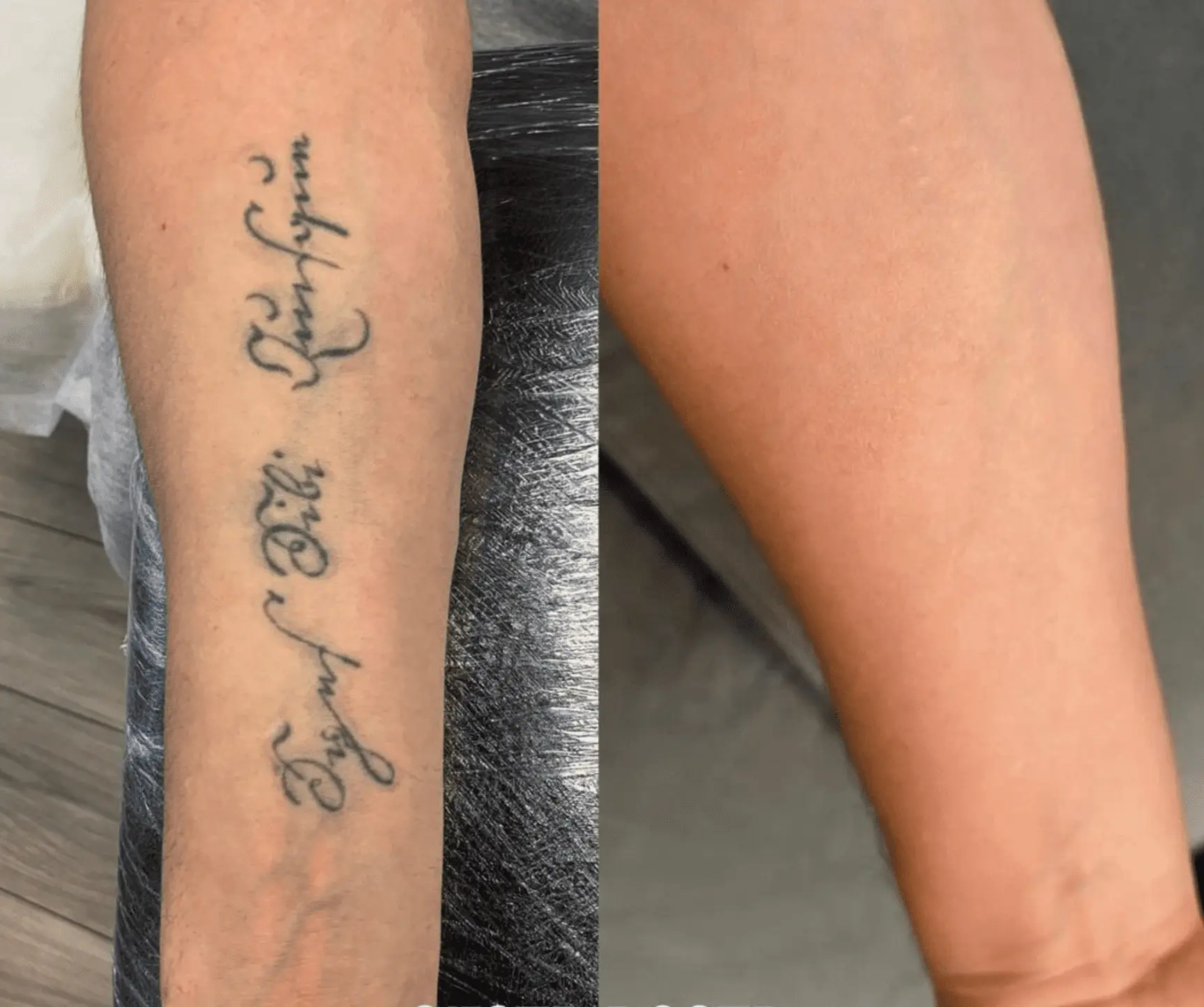
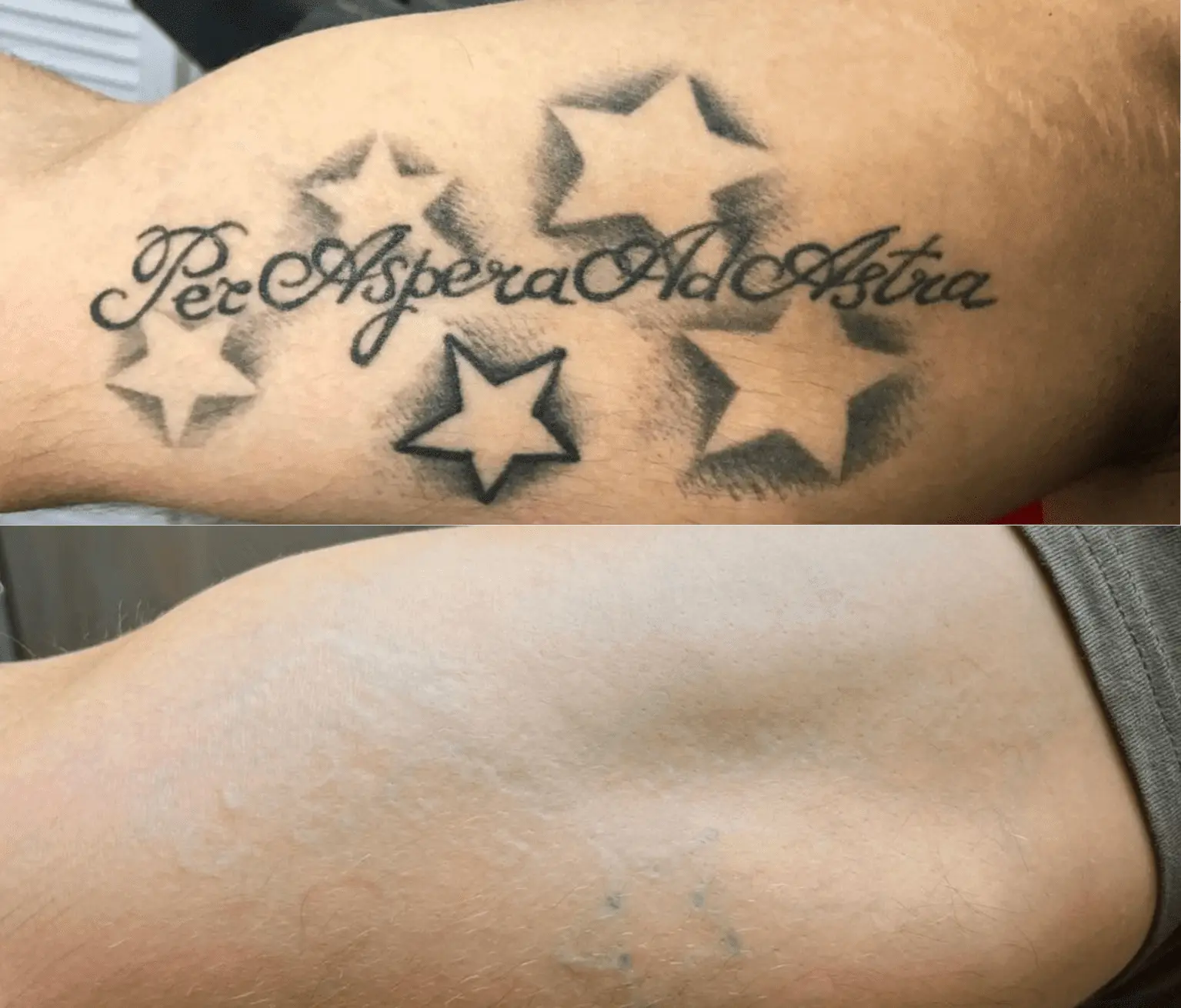
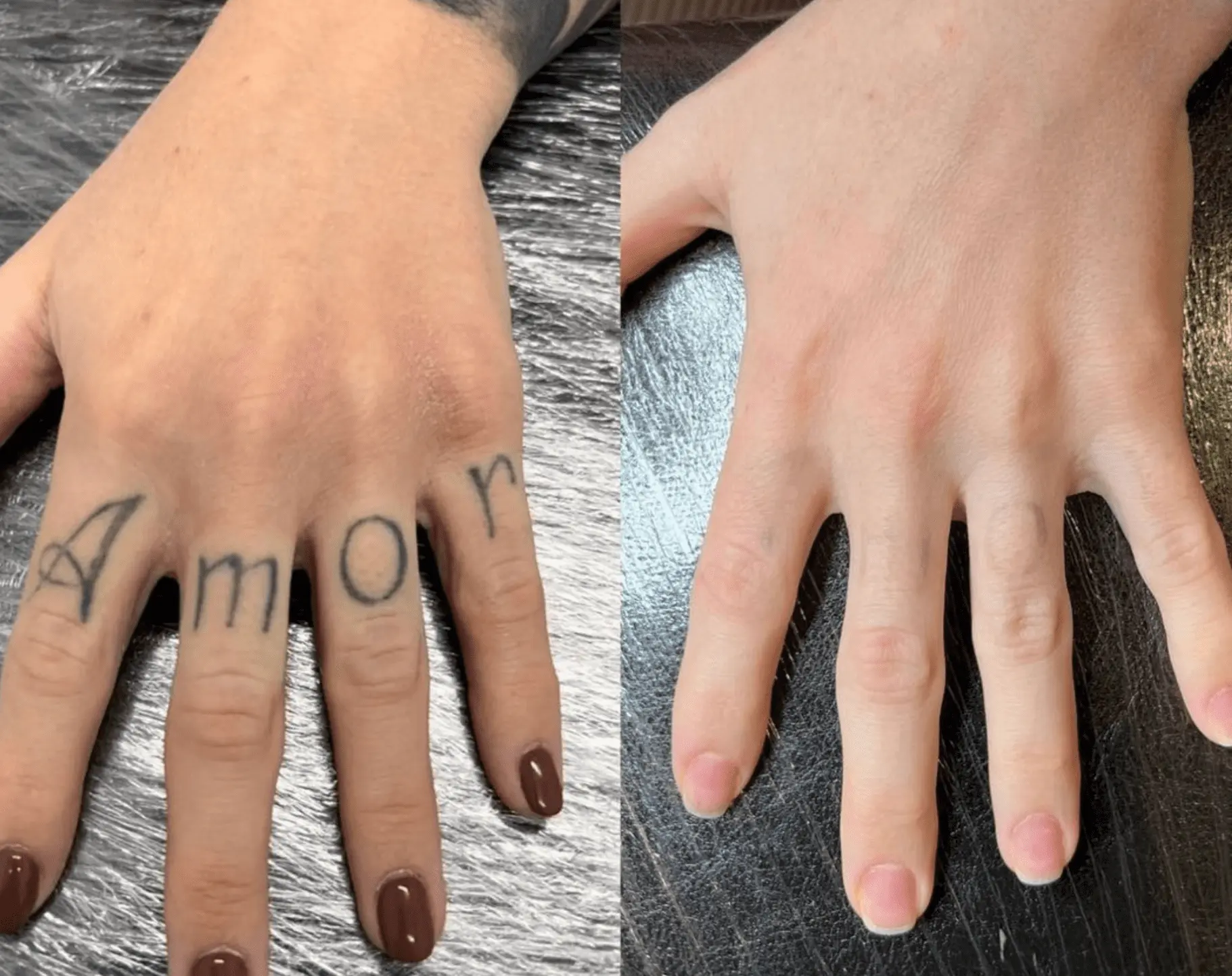
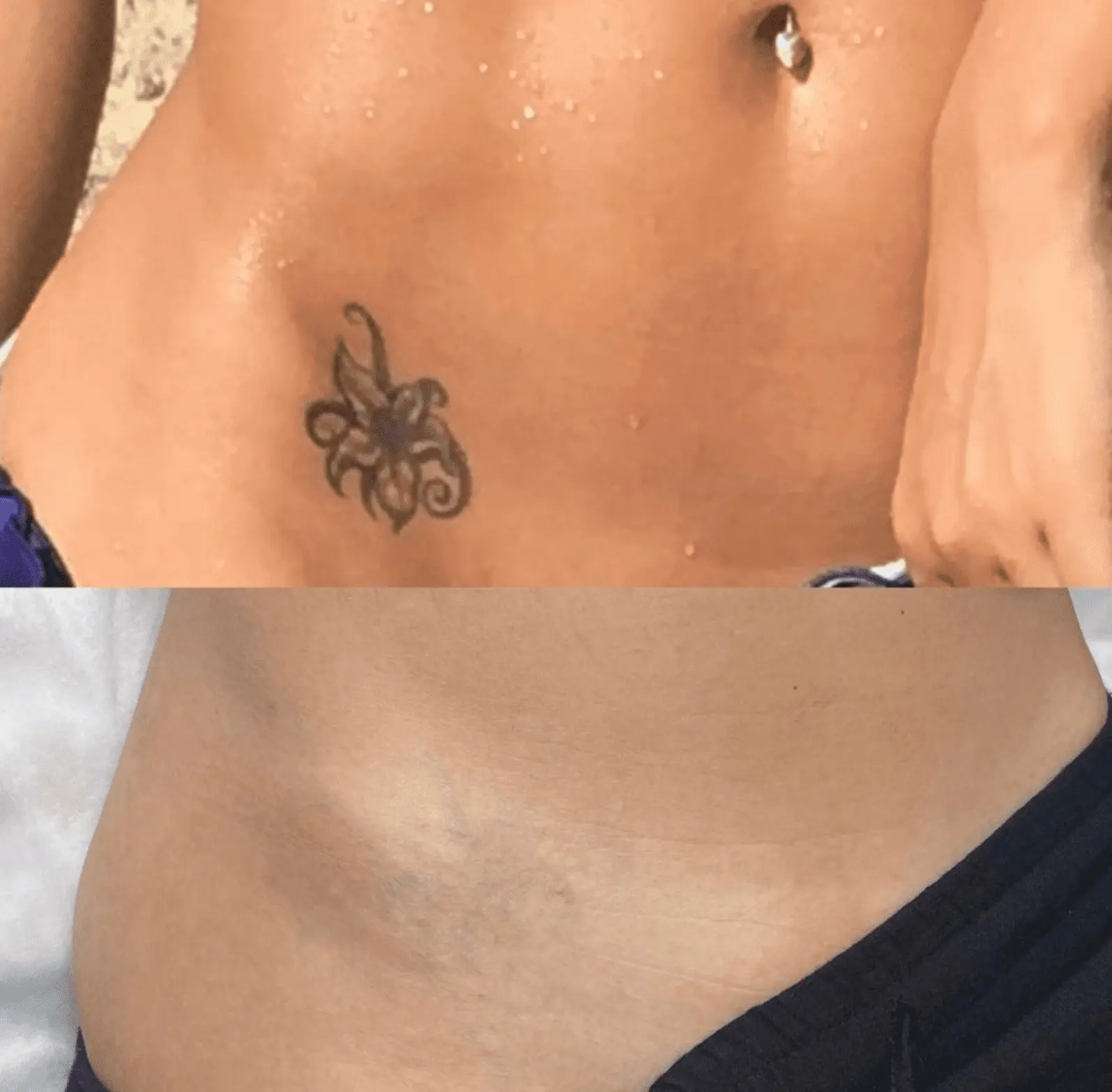
Safety glasses must be worn on the eyes. The before and after photos show the result of the first laser cosmetic tattoo removal. Your hairs are preserved, and the color of your skin has acquired a natural shade.
In the first few hours there will be slight redness and swelling. The symptoms can be relieved by treating the skin with chlorhexidine. After a few days, as after the tattoo, the skin may show crusts, which fall off on their own.
The technique of laser correction
How many sessions do I need?
The duration of therapy depends on many factors:
- the client’s skin type;
- speed of metabolism;
- the depth of the pigment introduction;
- the age and quality of the tattoo;
- the quality of the dye;
- the tattoo removal colour of the pigment.
The frequency of procedures is from 1.5 to 2 months. It is possible to repeat the laser only after complete healing. It may take six months or more for the brow tattoo to heal. Based on the results of the first 3-4 treatments, it will become clear how many sessions will be needed approximately.
Care after procedure
Immediately after tattoo removal redness and small bruises on the skin may be observed. Wounds heal quickly, leaving no scars or scars. For a speedy rehabilitation, it is necessary to adhere to the recommendations of the master:
- not to touch the eyebrows with your hands;
- treat the skin with chlorhexidine;
- do not remove the crusts that form;
- within 2 weeks, do not go to the sauna and do not sunbathe;
- not to wet the eyebrows for a couple of days;
- within a month, apply sunscreen to the skin to avoid the appearance of
- pigment spots.
What lasers are used?
Reviews
The results of tattoo removal can be judged by the reviews of girls who have already undergone a similar procedure. Most women speak positively about the laser. Many note that the eyebrows become unusually light, which indicates the effectiveness of the procedure right from the first time.
Girls note the following advantages of the laser:
- quick result;
- painless procedure;
- preservation of hairs;
- complete disintegration of the dye.
In some cases, removers may be necessary for removal. Sessions can be alternated. Specialists at our studio can help you choose the right technique for removing tattooing.